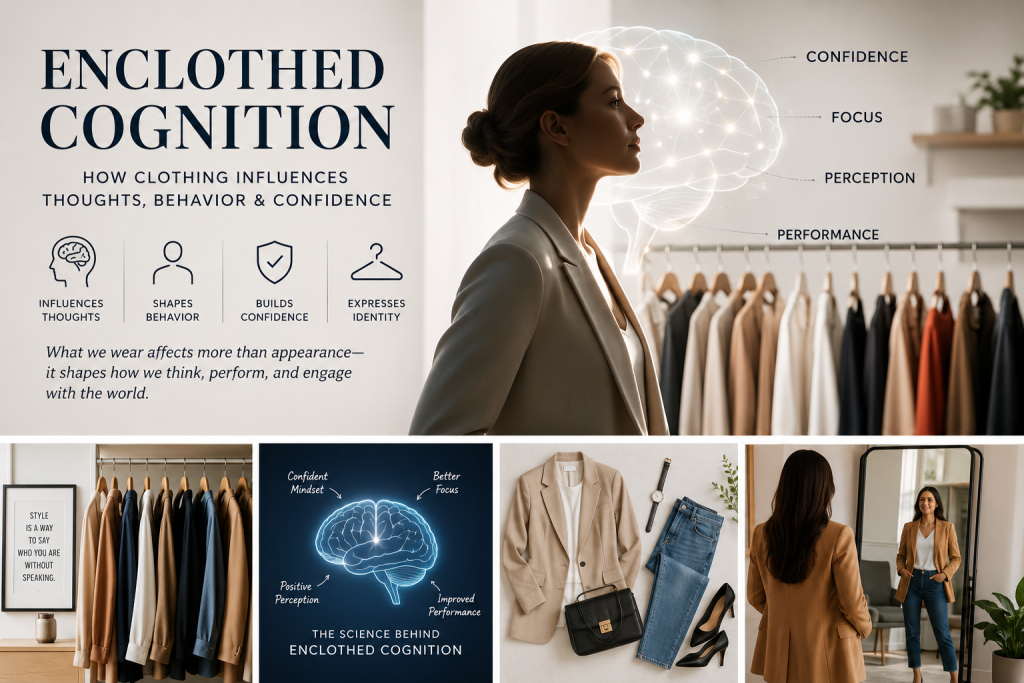
Understanding the Core: What Is Enclothed Cognition?
How Clothing Influences Thoughts, Feelings, and Behavior
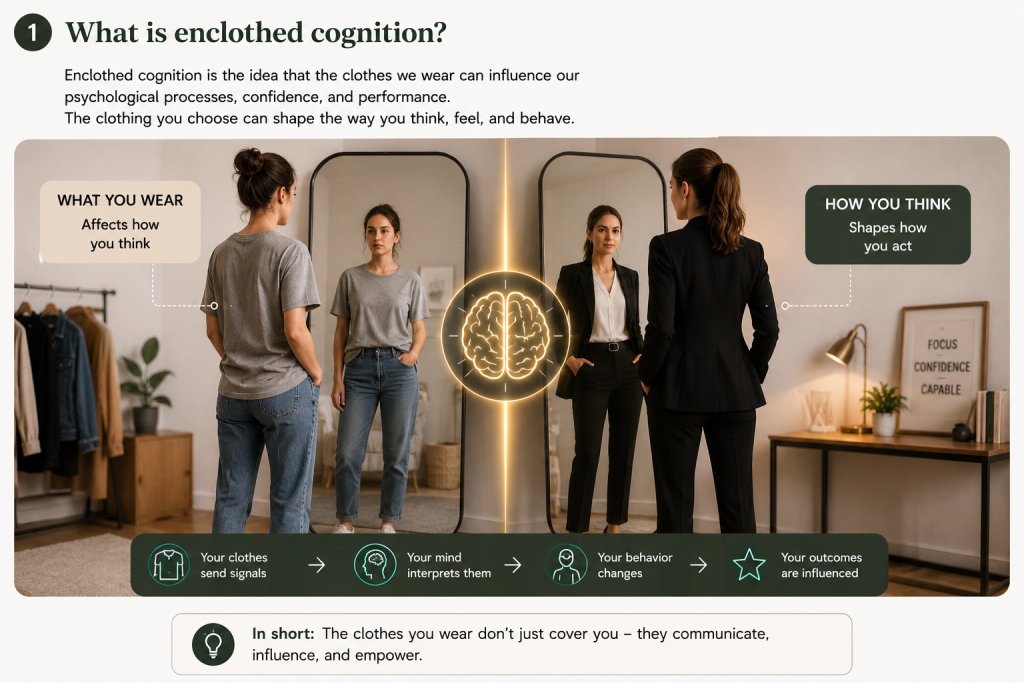
Clothing is more than fabric, style, or fashion trends. What we wear can influence how we think, how we behave, and even how we perform in everyday situations. Researchers call this phenomenon enclothed cognition.—the psychological connection between clothing and cognitive processes.
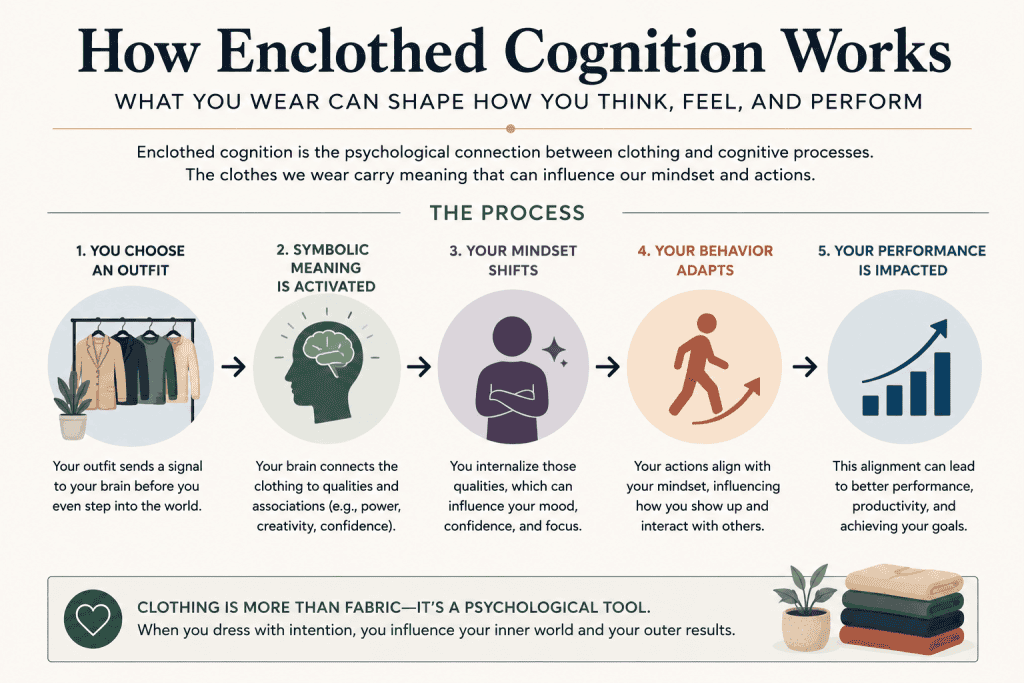
The concept of enclothed cognition suggests that clothing carries symbolic meaning. When we wear certain garments, we often internalize the qualities those garments represent. A tailored blazer may encourage confidence and professionalism, while athletic clothing may inspire energy and motivation. The clothes themselves do not magically change who we are, but they can influence how we perceive ourselves and how we interact with the world around us.
This relationship between clothing and psychology has become an important topic within fashion psychology, personal style development, and creative identity studies. Researchers have found that the symbolic meaning attached to clothing can affect attention, confidence, perception, and behavior.
Why Clothing Affects Behavior
Every outfit sends signals. Some signals direct attention outward toward others, while other signals direct attention inward toward ourselves. The colors, textures, silhouettes, and cultural associations connected to clothing can influence mood, confidence, focus, and decision-making.
A person wearing clothing associated with authority may feel more confident during an important presentation. Someone wearing creative, expressive clothing may feel more inspired and authentic. These responses occur because our brains continuously interpret visual symbols, including the symbols we wear ourselves.
The Connection Between Clothing and Personal Identity
Understanding this relationship reveals why personal style, identity expression, and visual presentation can have a measurable impact on confidence, creativity, productivity, and decision-making.
At Artbound Ink & Form, we explore the intersection of wearable art, creative identity, visual storytelling, color psychology, and self-expression. Furthermore, enclothed cognition sits at the center of these ideas because it demonstrates that clothing is not merely decorative—it is communicative.
As a result, what we wear becomes part of how we experience ourselves and how others experience us.
This article explores the science behind enclothed cognition, its connection to personal identity, and how intentional style choices can become powerful tools for confidence, creativity, and emotional expression.
Understanding the Core: What Is Enclothed Cognition?
Researchers introduced the term “enclothed cognition” to describe how clothing influences psychological processes. The concept shows how clothing influences both wearers and observers through symbolic meaning and physical experience.
For example, wearing professional attire may encourage greater focus and confidence, while wearing athletic clothing may increase feelings of motivation and energy. The clothing itself does not magically change a person. Instead, the symbolic associations connected to that clothing influence mindset and behavior.
This makes clothing much more than appearance. It becomes a psychological tool that can support performance, creativity, and self-expression.
The Science Behind Enclothed Cognition
Research in psychology has demonstrated that what we wear can influence attention, perception, confidence, and behavior. In one of the most widely referenced studies, participants wearing a lab coat associated with intelligence and focus performed better on attention-related tasks than participants who did not wear the garment.
The key factor was not simply wearing the clothing. It was the symbolic meaning attached to it.
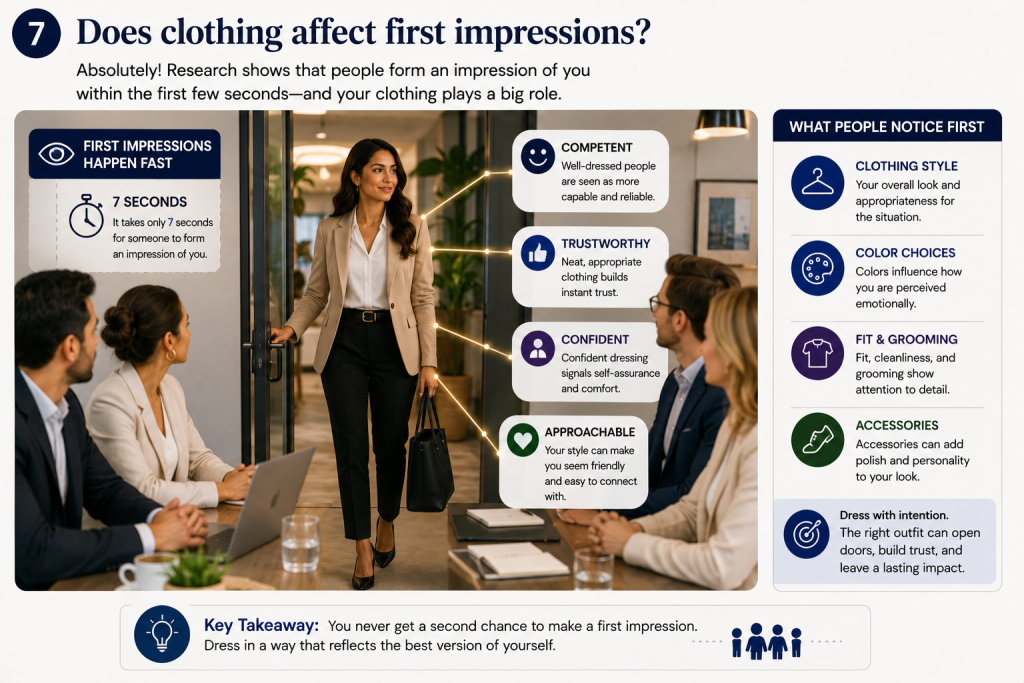
Our brains constantly process visual information. Clothing acts as a signal system that communicates identity, status, purpose, and intention. When we wear garments associated with competence, creativity, professionalism, or authority, those symbolic meanings can influence our thoughts and actions.
This is one reason personal style has such a powerful effect on confidence. Clothing changes not only how others perceive us, but also how we perceive ourselves.
Clothing as Identity Signaling
Every outfit tells a story.
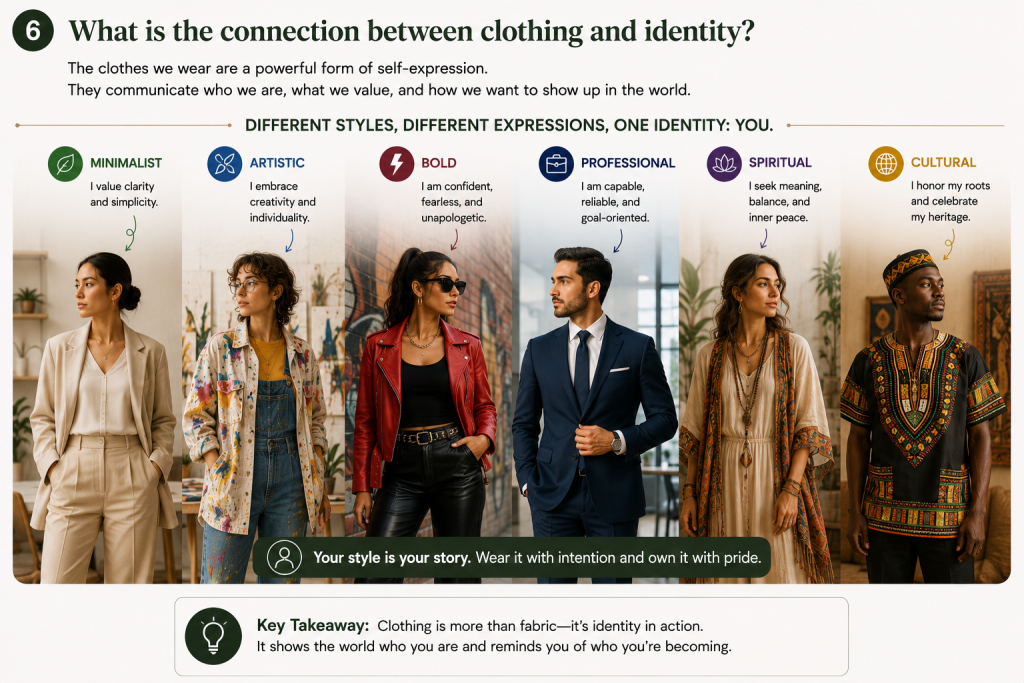
Whether intentional or not, clothing communicates information about personality, interests, values, and identity. This process is known as identity signaling.
A creative individual may gravitate toward bold colors, artistic prints, or unusual silhouettes. Someone seeking simplicity may prefer clean lines and neutral palettes. These choices create visual cues that communicate personal values before a single word is spoken.
At Artbound Ink & Form, identity signaling is closely connected to wearable storytelling. Clothing becomes a visual language that allows individuals to express who they are and what they believe.
The most effective personal style is not based on trends alone. It is built on authenticity. When style aligns with identity, confidence naturally follows.
The Connection Between Wearable Art and Enclothed Cognition
The concept of enclothed cognition connects naturally to wearable art. If clothing can influence thought, behavior, and confidence, then every garment becomes more than fashion—it becomes a creative tool.
Wearable art transforms clothing into a form of visual communication. Colors, symbols, patterns, textures, and silhouettes all contribute to the message being expressed. Instead of treating clothing as a simple necessity, wearable art treats it as an extension of identity.
This is one of the core ideas behind Artbound Ink & Form. Clothing can function as a visual language that communicates values, emotions, interests, and aspirations. The garments we choose become part of our personal narrative.
When someone intentionally selects clothing that aligns with their identity, they are participating in both self-expression and self-reinforcement. Their external appearance begins to support the internal story they want to tell themselves and the world around them.
Color Psychology and Emotional Response
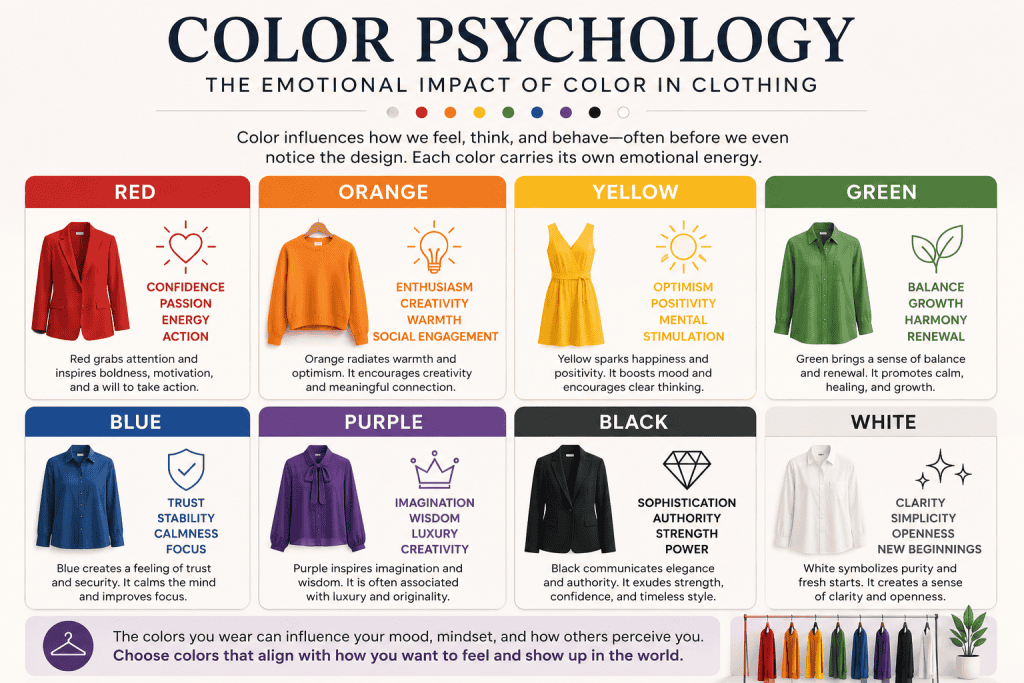
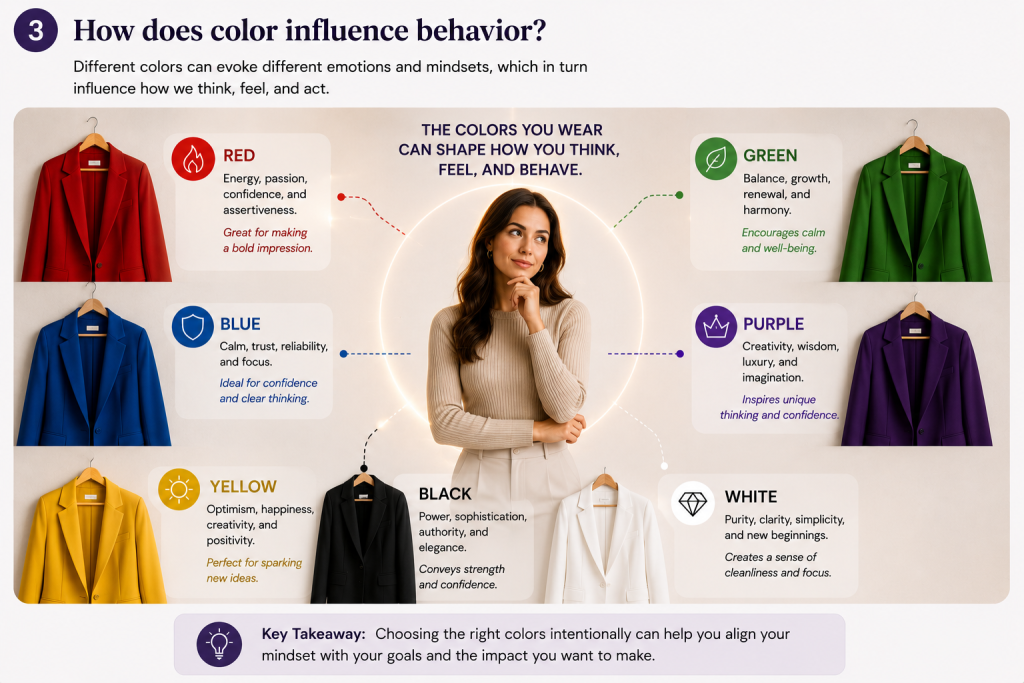
Color plays a significant role in how clothing influences emotions and behavior. Long before someone notices a specific design or symbol, they often respond to color.
Different colors tend to evoke different emotional associations:
Below are examples of how different colors can influence perception, mood, and personal style choices.
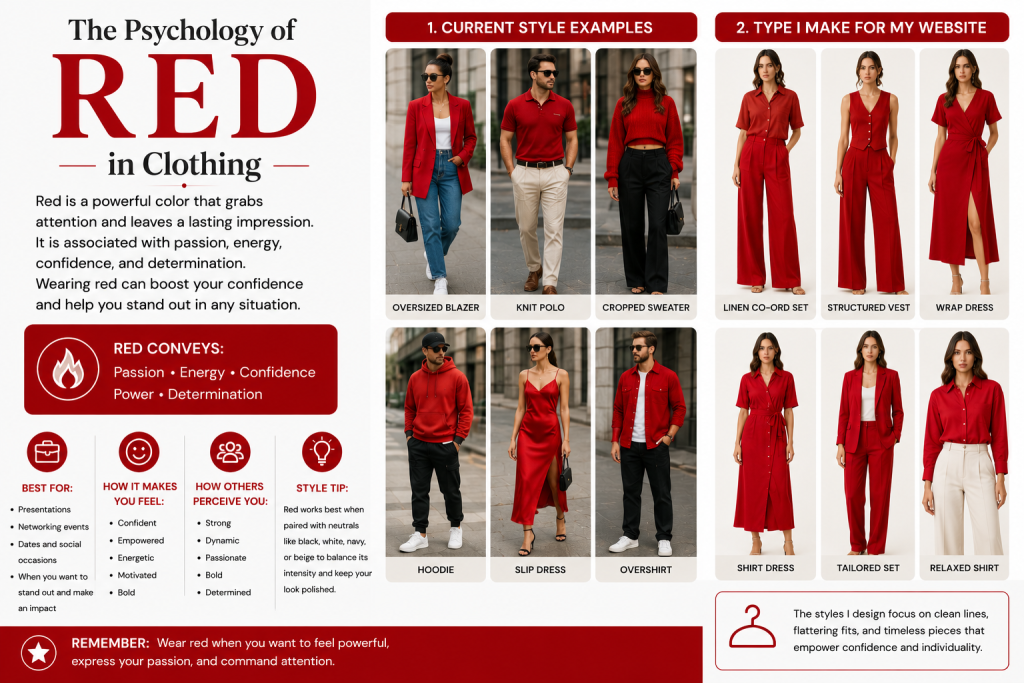
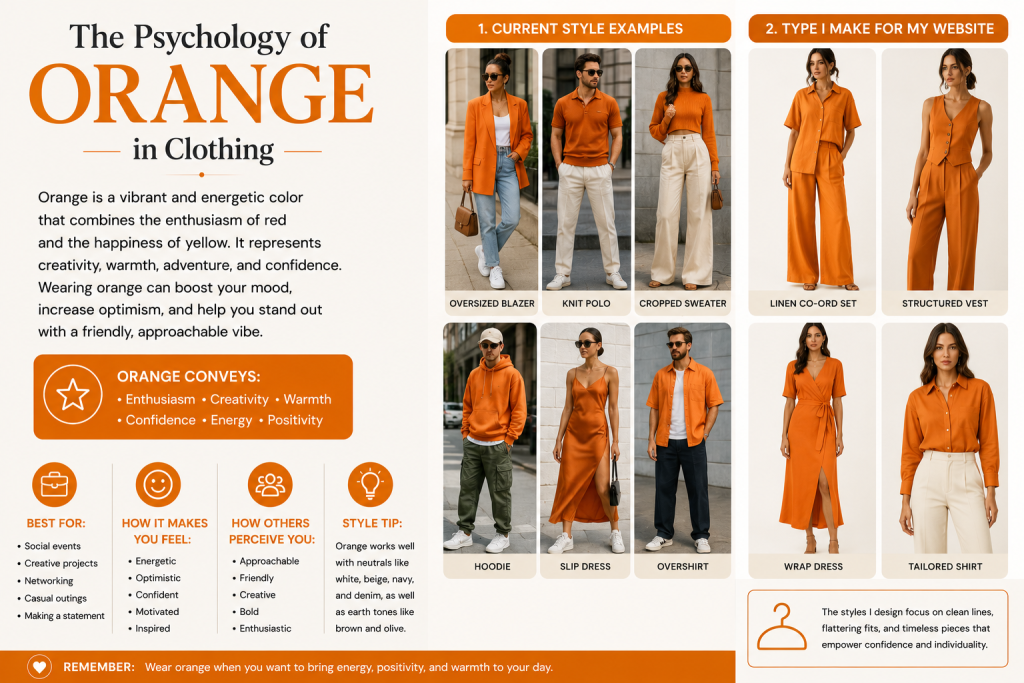
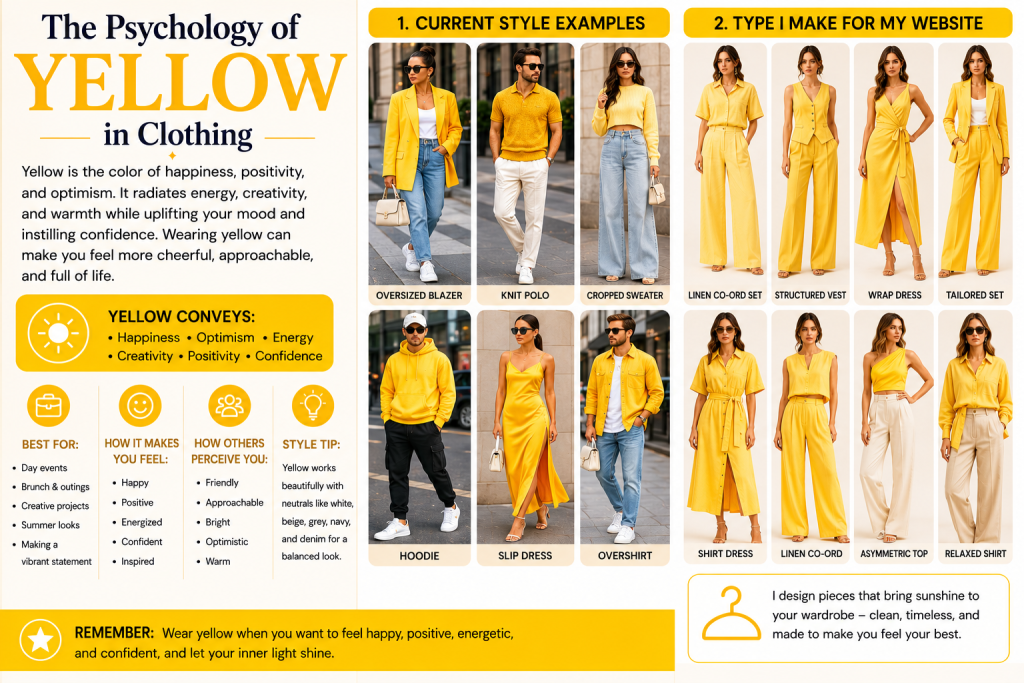
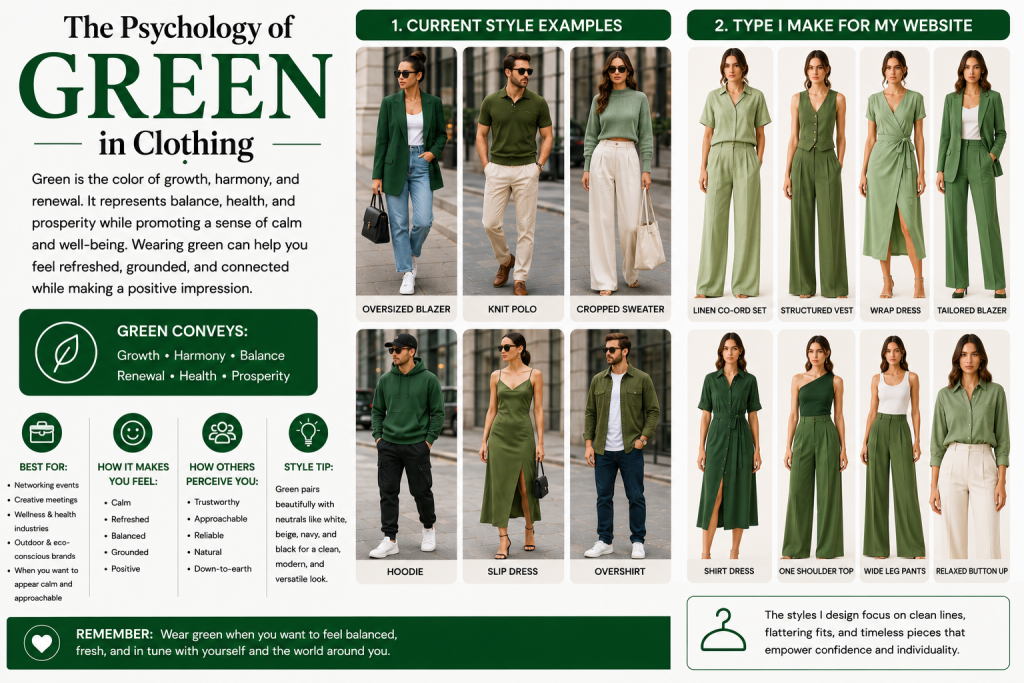
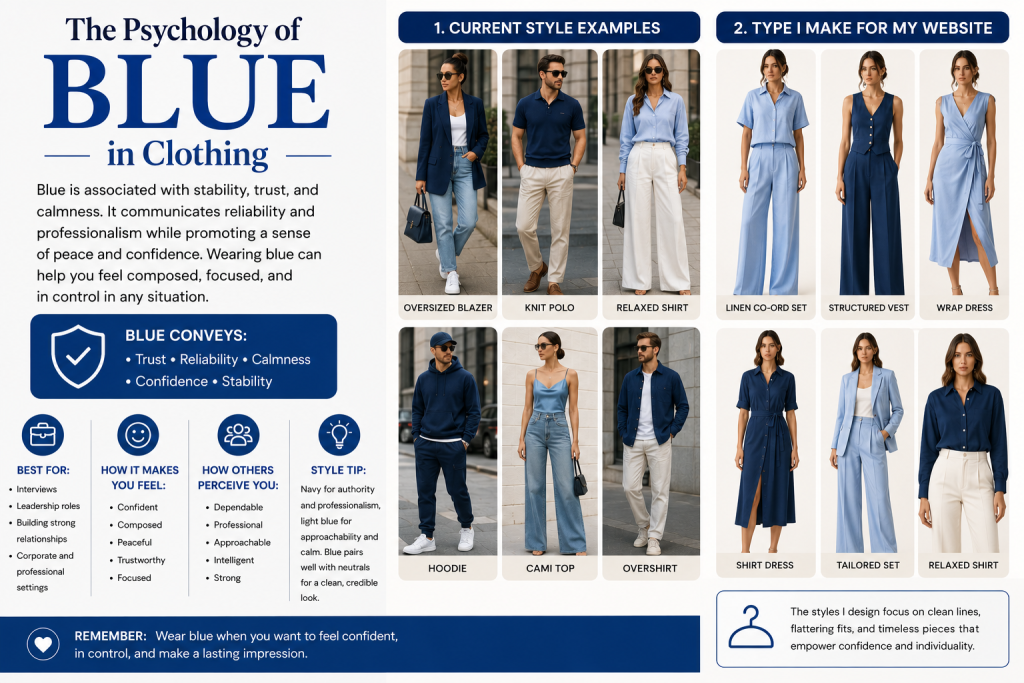
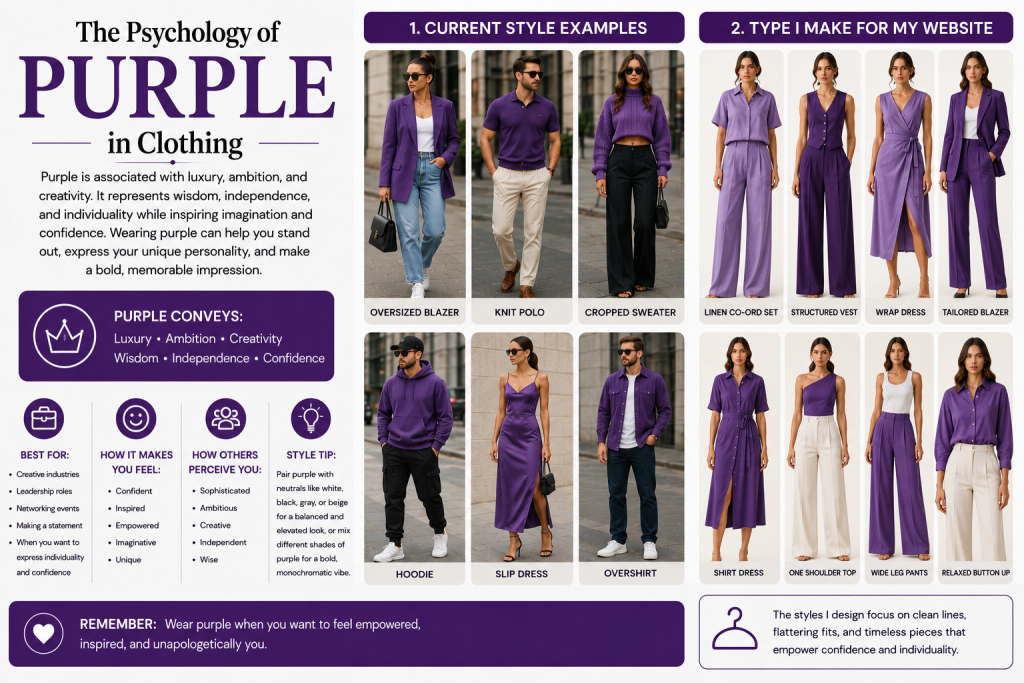
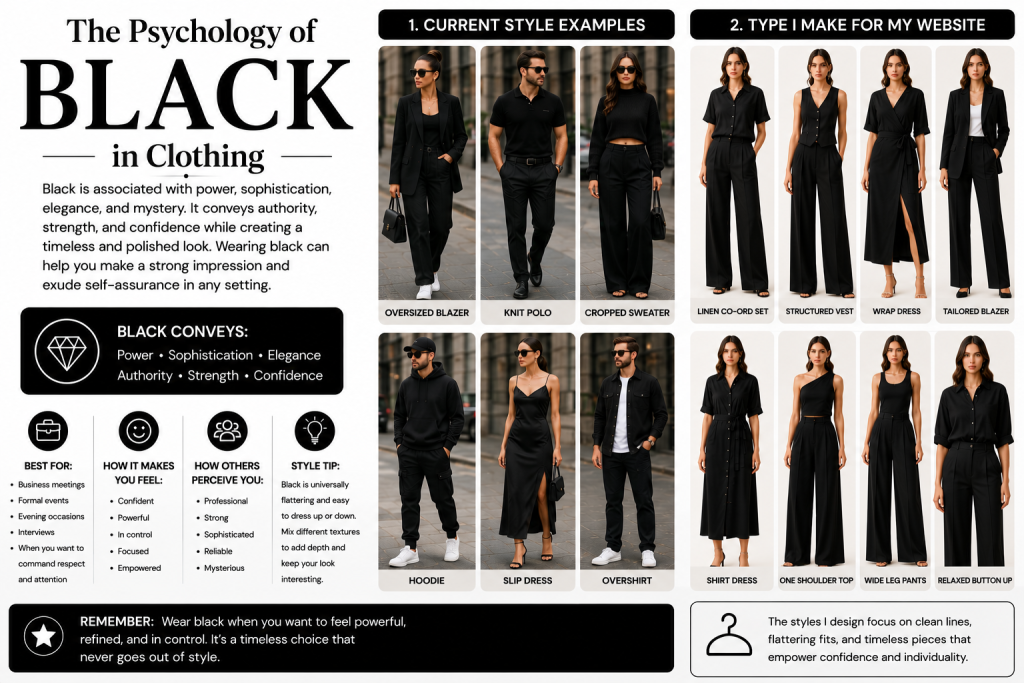
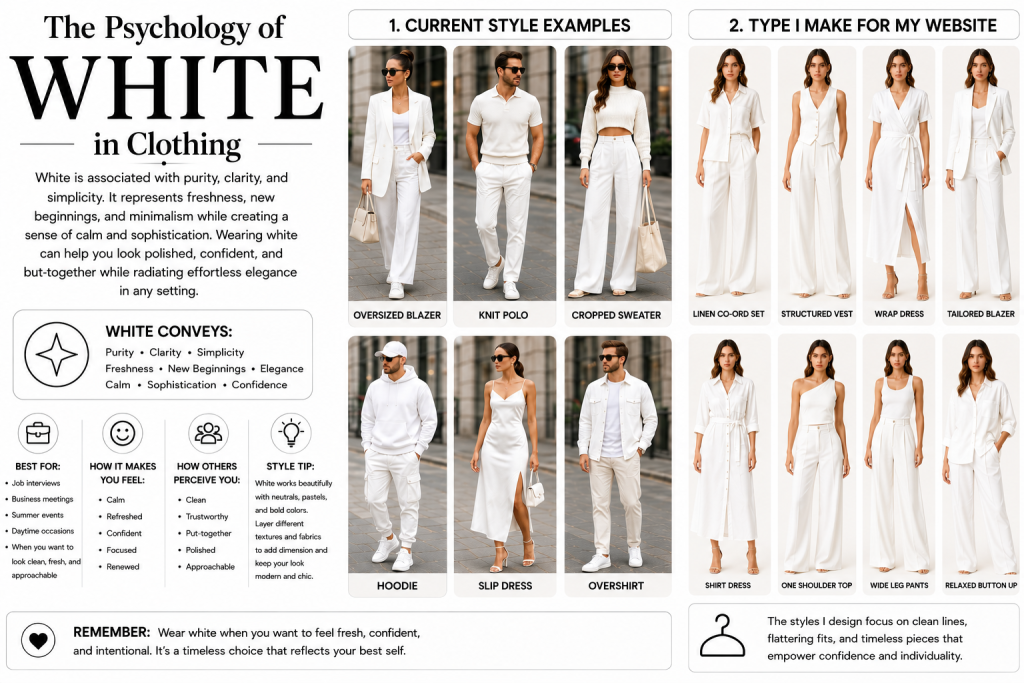
These emotional associations are one reason color psychology is such an important component of visual storytelling and personal style. By understanding how colors influence perception, individuals can make more intentional choices about how they present themselves and how they want to feel. As a result, individuals can make more intentional choices about how they present themselves and how they want to feel.
Creative Identity and Personal Style
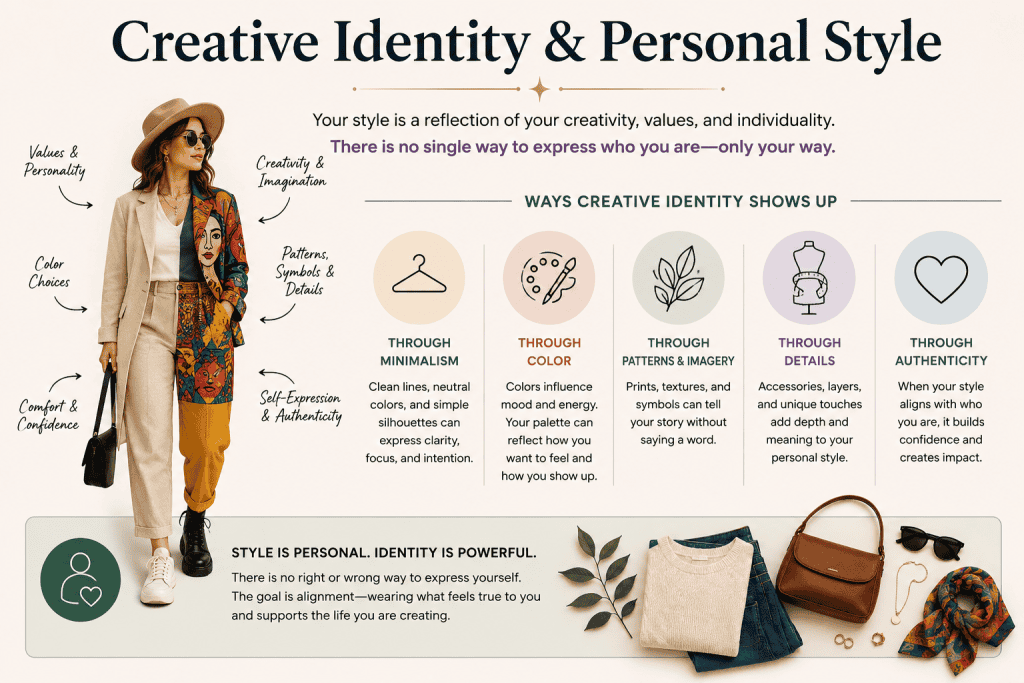
Personal style is one of the most visible forms of creative identity.
Every day, individuals make choices about clothing, accessories, color combinations, and presentation. These choices gradually form a recognizable visual identity.
However, creative identity is not about following trends. It is about understanding what resonates personally and building a style system around those preferences.
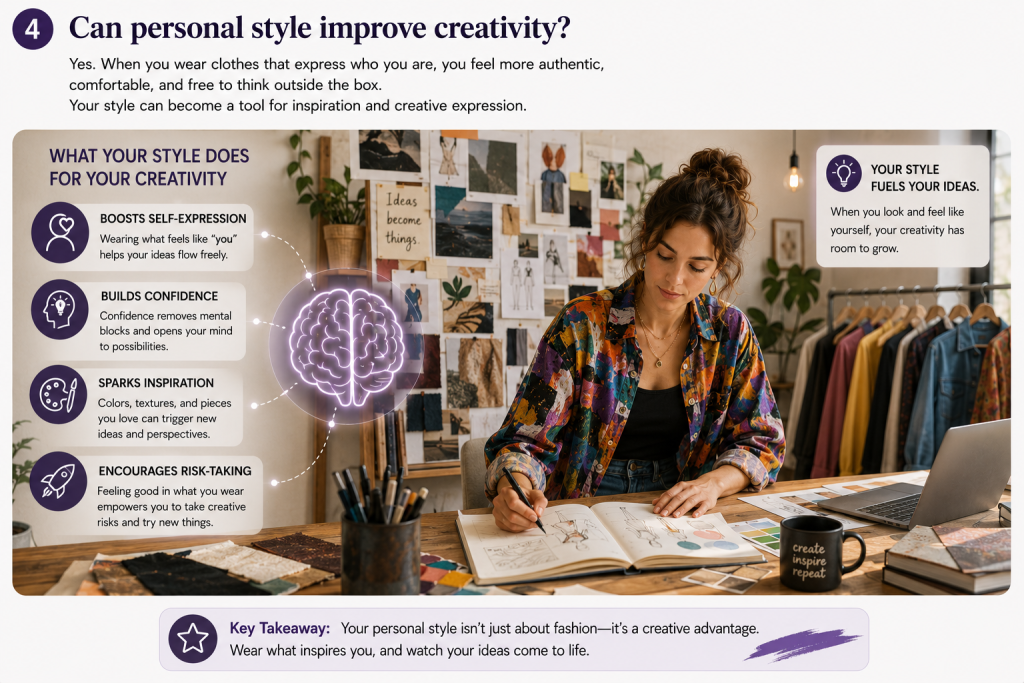
For some people, creative identity may be expressed through minimalism and neutral colors. For others, it may appear through bold patterns, vibrant color palettes, symbolic imagery, or artistic garments.
The goal is not perfection. The goal is alignment.
When clothing reflects authentic identity, it creates consistency between how people see themselves and how they present themselves. This alignment often leads to increased confidence, stronger self-expression, and greater personal satisfaction.
Enclothed cognition suggests that these benefits are not merely emotional—they can also influence behavior, focus, and performance in measurable ways.
Practical Applications of Enclothed Cognition
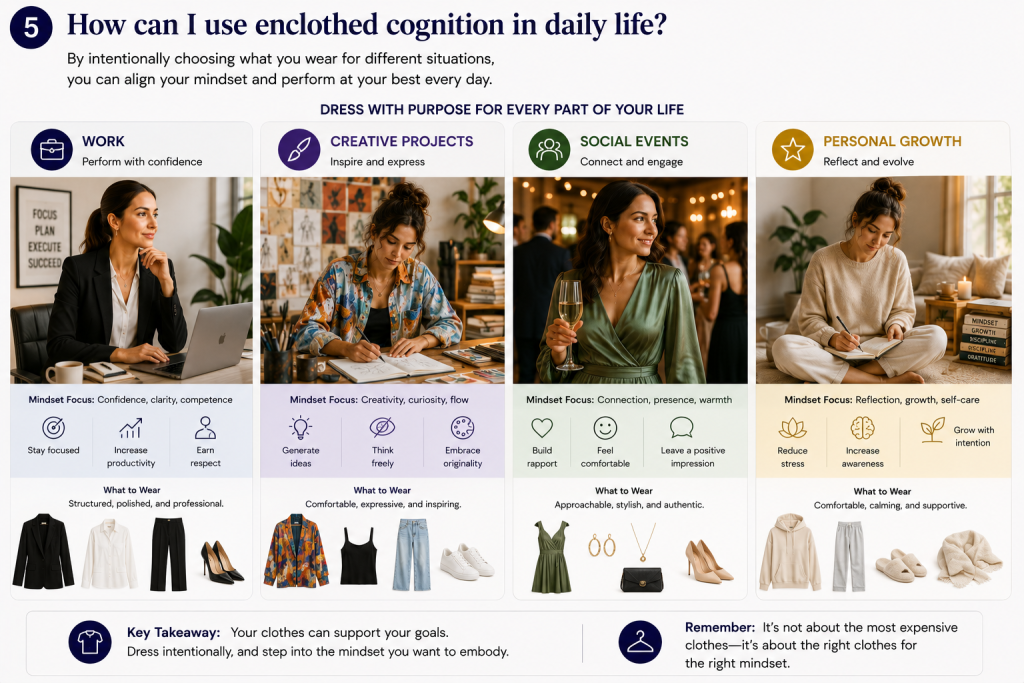
As a result, understanding enclothed cognition allows people to use clothing more intentionally in everyday life.
For Professional Settings:
For example, choosing clothing that communicates competence, organization, and confidence can reinforce a professional mindset.
Choose clothing that communicates competence, organization, and confidence. Structured garments, clean lines, and intentional color choices can help reinforce a professional mindset.

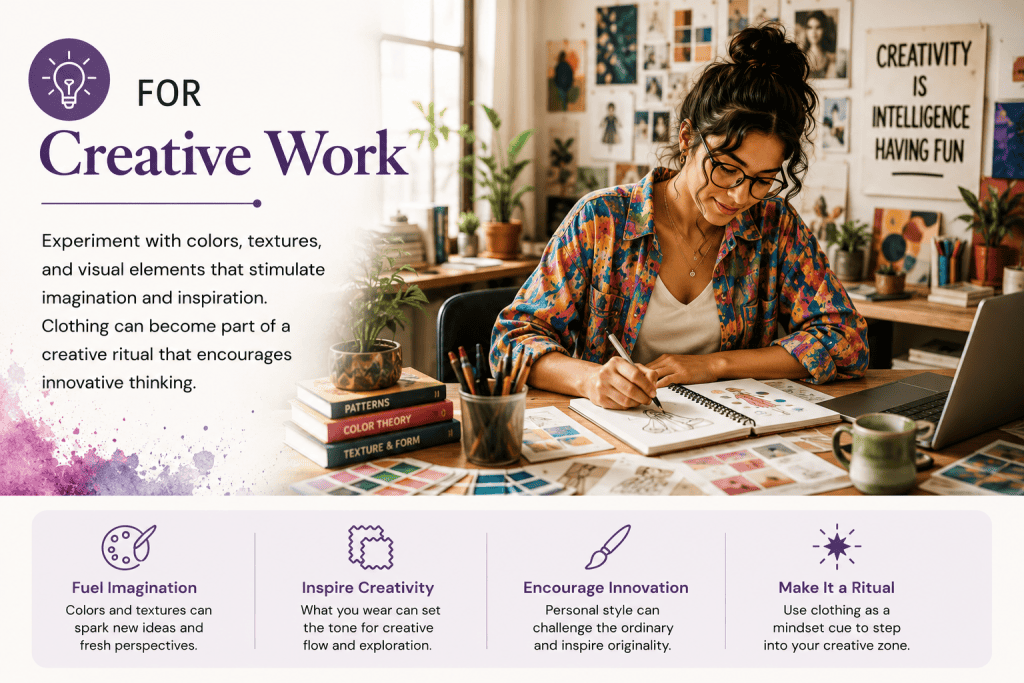
For Creative Work:
Additionally, experiment with colors, textures, and visual elements that stimulate imagination and inspiration. Clothing can become part of a creative ritual that encourages innovative thinking.
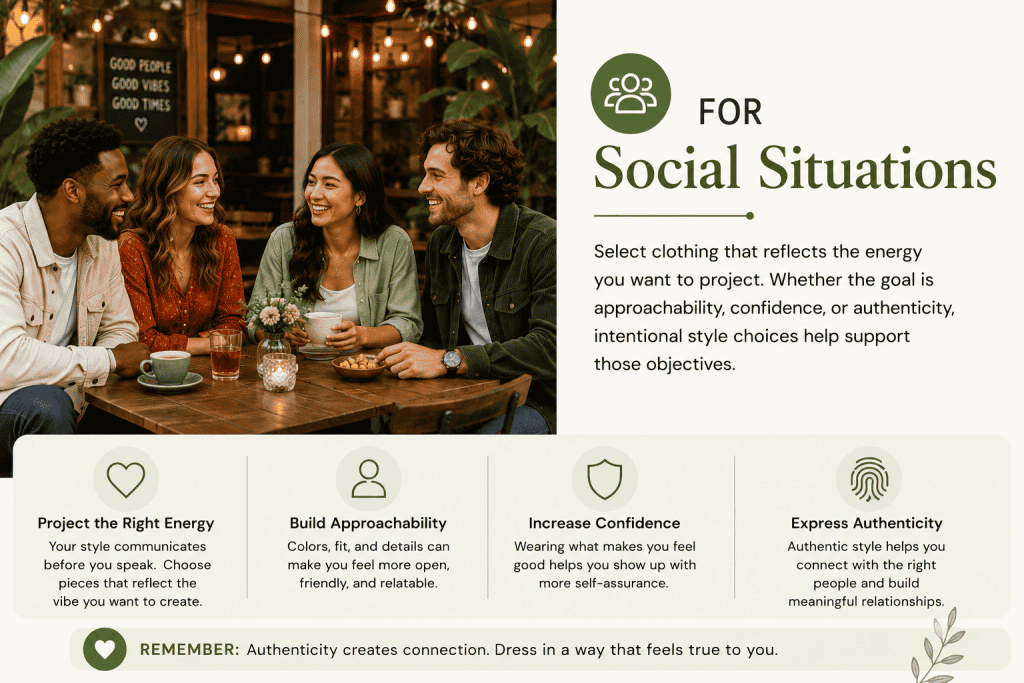
For Social Situations:
Select clothing that reflects the energy you want to project. Whether the goal is approachability, confidence, or authenticity, intentional style choices help support those objectives.
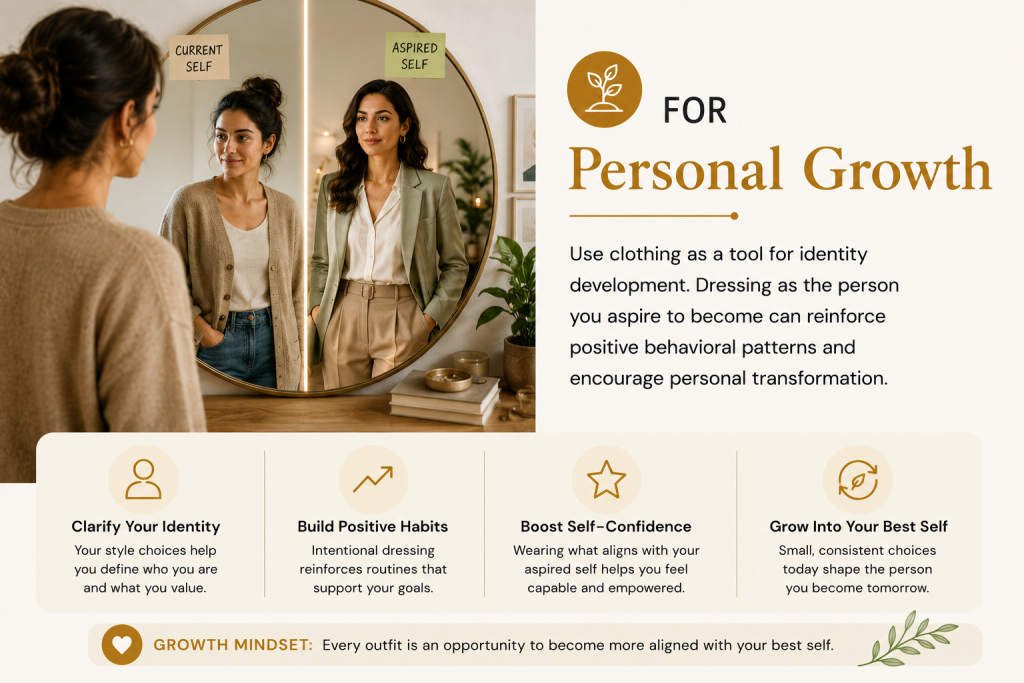
For Personal Growth:
Use clothing as a tool for identity development. Dressing as the person you aspire to become can reinforce positive behavioral patterns and encourage personal transformation.
The most important lesson is that clothing should be viewed as an active participant in self-expression rather than a passive necessity.
Frequently Asked Questions (FAQ)
Q1: What is enclothed cognition?
A: A: Enclothed cognition is the psychological concept that clothing can influence thoughts, behaviors, confidence, attention, and performance. As a result, the symbolic meaning we associate with clothing can affect how we feel and act.
Q2: Is enclothed cognition scientifically supported?
A: Yes. Research in psychology has demonstrated that clothing can influence cognitive performance, attention, confidence, and behavior. Studies suggest that both the symbolic meaning of clothing and the experience of wearing it contribute to these effects.
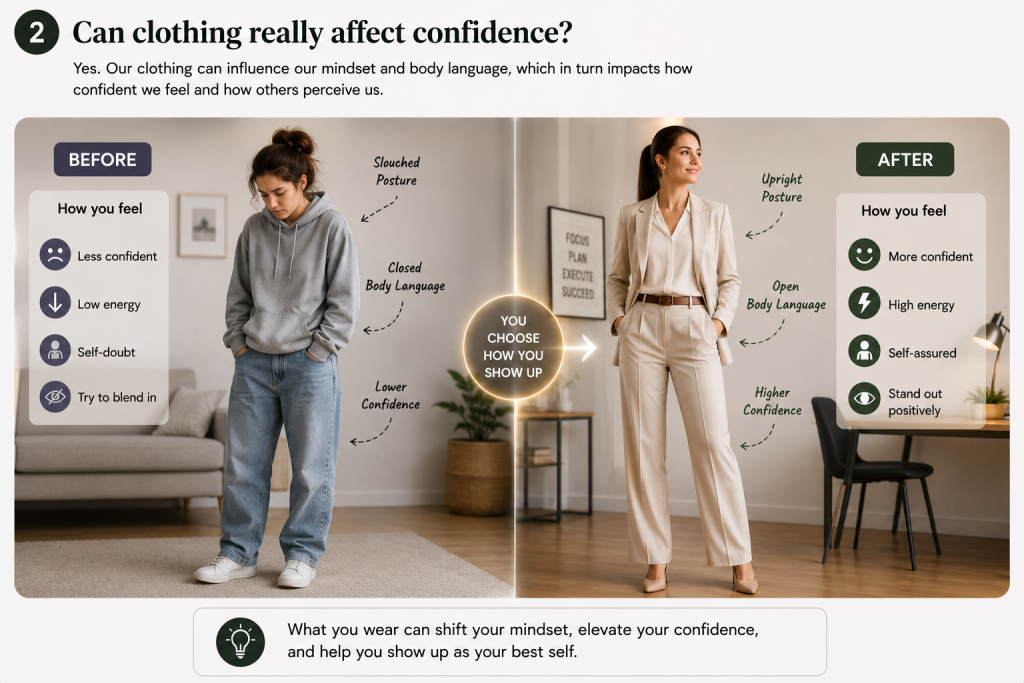
Q3: Can clothing really improve confidence?
A: Clothing alone does not create confidence, but it can reinforce confident feelings. When people wear clothing that aligns with their identity, goals, or desired mindset, they often experience greater self-assurance and comfort.
Q4: How does color psychology relate to enclothed cognition?
A: Color psychology explores how colors influence emotions and perception. Because color is one of the first visual elements people notice, it plays a major role in how clothing affects mood, confidence, and self-expression.
Q5: What is wearable art?
A: Wearable art transforms clothing into a creative medium. It combines design, symbolism, color, and personal expression to communicate meaning beyond function or fashion trends.
Q6: Can personal style influence productivity?
A: Many people find that dressing intentionally helps create a mindset aligned with their goals. Professional clothing may encourage focus, while creative clothing may stimulate imagination and self-expression.
Q7: Does enclothed cognition apply to everyone?
A: Individual experiences vary, but most people attach meaning to clothing. Because those meanings differ across cultures, professions, and personal experiences, the effects of clothing may be unique to each person.
Related Reading: Dopamine Dressing: Why the Colors You Wear Affect How You Feel
Research on Enclothed Cognition
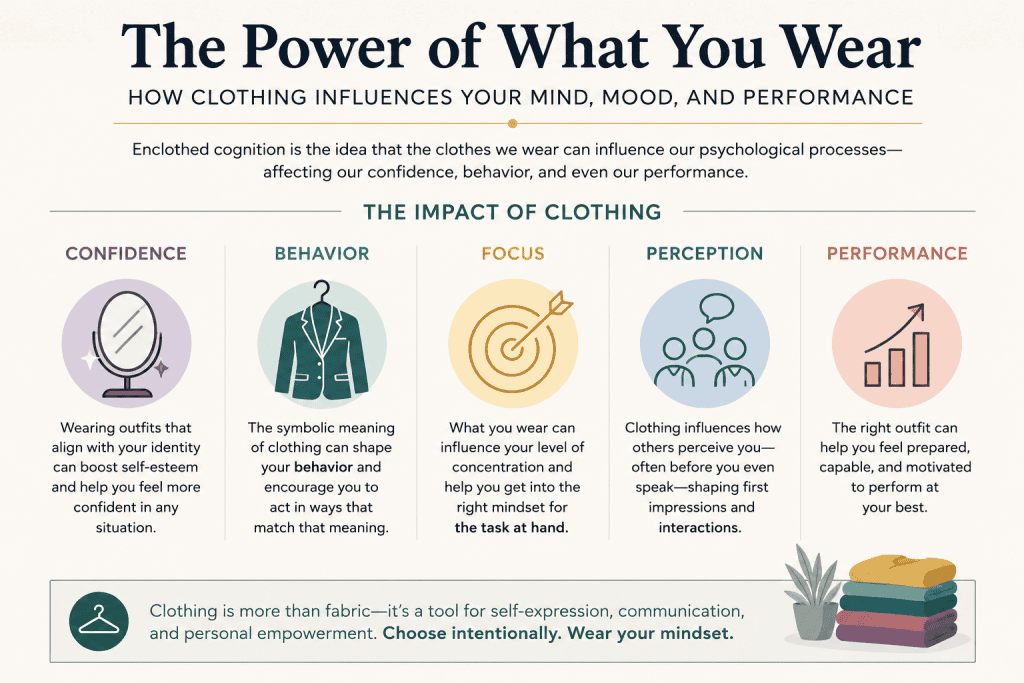
The concept of enclothed cognition was introduced by researchers Hajo Adam and Adam Galinsky, whose groundbreaking research explored how clothing influences attention, perception, confidence, and behavior. Their findings suggest that what we wear affects far more than appearance—it can shape how we think, perform, and interact with the world around us.
Conclusion
Enclothed cognition reminds us that clothing is never just clothing. What we wear influences how we think, how we feel, and how we engage with the world around us.
The connection between clothing, identity, color psychology, and self-expression reveals that style is much more than appearance. It is a form of communication, a reflection of personal values, and a tool for shaping experience.
At Artbound Ink & Form, we view fashion through the lens of visual storytelling, creative identity, wearable art, and emotional expression. Every garment carries the potential to communicate meaning, reinforce confidence, and strengthen the connection between who we are and how we choose to present ourselves.
Understanding enclothed cognition allows us to make more intentional choices—not only about what we wear, but about the stories we tell through design, color, and personal style.
About the Author
Jaysen Mansfield is the founder of Artbound Ink & Form and creator of DigitalGlowHaus. Additionally, his work explores the relationship between wearable art, creative identity, color psychology, visual storytelling, self-expression, and AI-assisted creativity.
Furthermore, through educational articles, symbolic design systems, and creative worldbuilding, he helps readers understand how art, fashion, and visual communication influence the way we experience ourselves and the world around us.